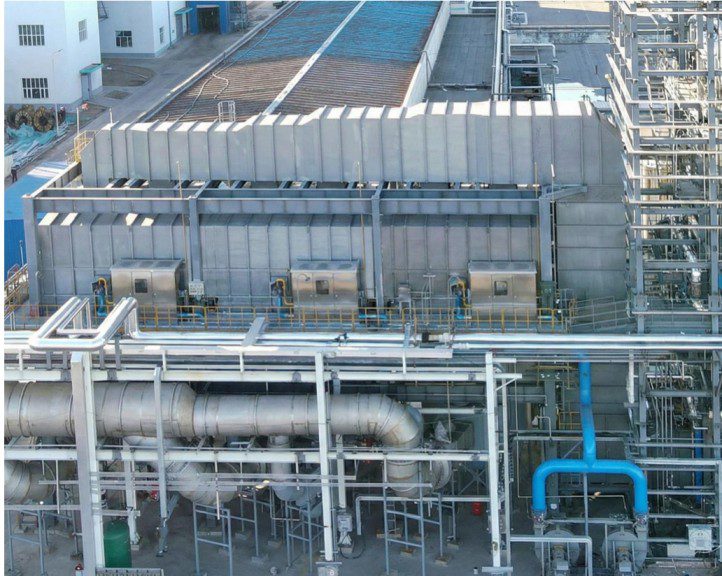
Introduction to Green Hydrogen Regenerative Thermal Oxidizers
In the evolving landscape of industrial emissions control and sustainable energy solutions, the integration of green hydrogen with regenerative thermal oxidizers (RTOs) represents a significant advancement. This technology combines the efficiency of traditional RTO systems with the clean energy potential of green hydrogen, offering a pathway to reduce environmental impact while maintaining operational reliability. As industries face increasing regulatory pressures to minimize volatile organic compounds (VOCs) and other pollutants, adopting such innovative systems becomes essential for long-term viability.
Green hydrogen, produced through electrolysis using renewable energy sources, serves as a zero-emission fuel alternative. When incorporated into RTOs, it enhances the oxidation process by providing a cleaner combustion source, thereby lowering the overall carbon footprint of industrial operations. This article explores the fundamentals, benefits, and applications of green hydrogen regenerative thermal oxidizers, highlighting their role in promoting environmental stewardship and energy efficiency.

Understanding Regenerative Thermal Oxidizers
The Core Principles of RTO Technology
Regenerative thermal oxidizers are engineered systems designed to destroy harmful air pollutants through high-temperature oxidation. At their core, RTOs utilize ceramic heat recovery media to capture and reuse thermal energy from the exhaust stream, achieving thermal efficiencies often exceeding 95%. This process involves directing polluted air into a combustion chamber where temperatures reach 1,500 to 1,800 degrees Fahrenheit, effectively breaking down VOCs, hazardous air pollutants (HAPs), and odors into harmless byproducts like water vapor and carbon dioxide.
The regenerative aspect is facilitated by multiple beds of ceramic material that alternate between absorbing heat from outgoing clean gases and preheating incoming polluted streams. This cyclical operation minimizes fuel consumption and operational costs, making RTOs a preferred choice for industries such as chemical manufacturing, pharmaceuticals, and printing.
Evolution and Enhancements in RTO Design
Over the years, RTO designs have evolved to incorporate advanced features like poppet valves for precise flow control and enhanced insulation for better energy retention. Modern systems also integrate sophisticated monitoring tools, including real-time sensors for temperature, pressure, and emission levels, ensuring compliance with stringent environmental standards such as those set by the U.S. Environmental Protection Agency (EPA) or the European Union’s Industrial Emissions Directive.
These enhancements not only improve destruction efficiency—often reaching 99% or higher—but also extend equipment lifespan through reduced thermal stress. By focusing on durability and adaptability, contemporary RTOs can handle varying pollutant loads and flow rates, providing flexibility for diverse industrial applications.
The Role of Green Hydrogen in RTO Systems
Production and Properties of Green Hydrogen
Green hydrogen is generated via water electrolysis powered by renewable sources like solar, wind, or hydroelectric energy, distinguishing it from gray or blue hydrogen derived from fossil fuels. This production method results in a fuel that burns cleanly, producing only water as a byproduct and eliminating greenhouse gas emissions at the point of use.
In terms of properties, green hydrogen boasts a high energy density and rapid combustion characteristics, making it an ideal supplement or replacement for natural gas in thermal processes. Its integration into RTOs involves modifying burner systems to accommodate hydrogen’s unique flame speed and lower ignition energy, ensuring safe and efficient operation.
Integration Mechanisms and Technical Considerations
Integrating green hydrogen into regenerative thermal oxidizers requires careful engineering to optimize combustion dynamics. This may involve dual-fuel burners capable of switching between hydrogen and conventional fuels, or dedicated hydrogen injection systems that enhance oxidation without compromising system integrity.
Key technical considerations include managing hydrogen’s diffusivity to prevent leaks, implementing advanced safety protocols such as flame arrestors, and calibrating control systems for precise fuel-air ratios. Through these adaptations, green hydrogen not only boosts the RTO’s environmental performance but also contributes to energy independence by leveraging locally produced renewables.
Benefits of Green Hydrogen Regenerative Thermal Oxidizers
Environmental Advantages
One of the primary benefits is the substantial reduction in carbon emissions. By substituting fossil fuels with green hydrogen, industries can achieve near-zero CO2 output during the oxidation process, aligning with global net-zero targets. Additionally, this technology minimizes nitrogen oxide (NOx) formation due to hydrogen’s cleaner burn profile, further improving air quality.
Beyond emissions, green hydrogen RTOs support circular economy principles by utilizing waste heat for hydrogen production or other onsite processes, fostering resource efficiency and reducing reliance on non-renewable energy sources.
Economic and Operational Gains
Economically, these systems offer long-term savings through lower fuel costs and potential incentives from green energy subsidies. Operational gains include enhanced reliability, as hydrogen’s consistent quality reduces variability in combustion, leading to fewer maintenance interruptions.
Moreover, industries adopting this technology can enhance their market position by demonstrating commitment to sustainability, attracting environmentally conscious clients and investors. Case studies from sectors like automotive coatings have shown payback periods as short as three to five years, underscoring the financial viability.
Applications Across Industries
Chemical and Petrochemical Sectors
In chemical processing, where VOC emissions are prevalent from solvent-based reactions, green hydrogen RTOs provide an effective solution for treating exhaust streams. For instance, in polymer production, these systems ensure compliance while recovering energy that can be redirected to preheat feedstocks, optimizing overall plant efficiency.
Manufacturing and Other Fields
Manufacturing industries, including food processing and metal finishing, benefit from the odor and pollutant control offered by this technology. In electronics fabrication, where precision is paramount, the clean operation prevents contamination risks associated with traditional fuels.
Emerging applications extend to wastewater treatment facilities, where RTOs handle biogas impurities, and renewable energy hubs that integrate hydrogen storage with emission controls. This versatility positions green hydrogen RTOs as a cornerstone for future-proof industrial infrastructure.

Conclusion and Future Outlook
The advent of green hydrogen regenerative thermal oxidizers marks a pivotal shift toward sustainable industrial practices, blending proven emission control with innovative clean energy. As global regulations tighten and the push for decarbonization intensifies, these systems offer a robust, forward-thinking solution for industries committed to environmental responsibility.
For more detailed information on implementing regenerative thermal oxidizer solutions, including green hydrogen integrations, visit our website at https://regenerativethermaloxidiser.com/. CMN Industry Inc. stands ready to assist with customized consultations and expert guidance to meet your specific needs.
About the Author